Straight Line Steering, Inc.
1802 Smith Ave.
San Jose, California 95112
408-289-9850
Fax # 408-995-5942
Manual Steering Gears
Power Steering Pumps
Control Valves
Steering Cylinders
Rack and Pinions
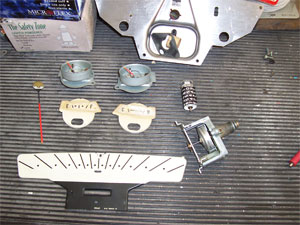
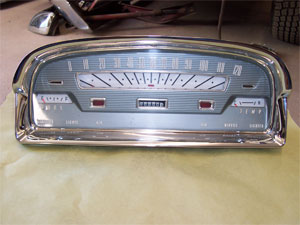
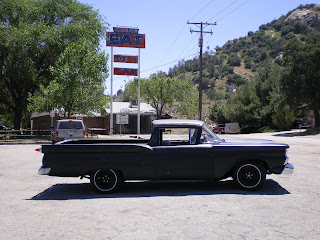
the rescue of a 1959 Ford Ranchero what was abandoned and salvaged... the story about a girl who rescued her and got the Ranchero back on the road...she has taken her to Vegas, Los Angeles and enjoys many summer weekends on the open road...moral of the story..never give up on anything...


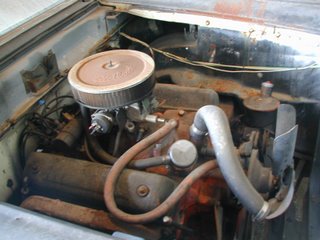
The first Y-block was the 1954 239 in³ (3.9 L) Ford engine; known for its deep skirting which causes the engine resemble a Y. Rated at 130 hp (97 kW), it replaced the 239 in³ (3.9 L) Flathead which was rated at 106 hp (79 kW). The Y-block was considered a major advancement over the flathead. Known for having oiling problems in the rocker shafts due to the fact the oil first went to the crankshaft bearing, then the camshaft bearings, then to the rocker shafts. This problem plagued the entire Y-block family and could be remedied by running a copper line from the oil pump and then to the rocker shafts. This series of engines also lacked the breathing abilities compared to the Chevrolet 265 small block, thus could not develop the same power.
The oiling problem was caused by the passage from the center cam bearing to the cylinder head being offset by an inch and too small. The motor oils available at that time were low in detergents but high in coke which when combined with short trips and infrequent oil changes led to this passage blocking up. This left the lower end with ample oil while the rocker shaft assemblies literally burned up. The external oiler kit essentially provided oil to the rocker shafts from the oil pressure port on the outside of the engine.
A quick reference of the engine specifications for 1955-57 will show the Ford V-8s ahead of the Chevrolet counterpart in displacement, horsepower and torque. The Y-block head provided excellent air flow, superior to the Chevrolet. The real enemy of the Y-block was its displacement limit. The original architecture was very small and tight. Even with the benefit of today's technology, (aftermarket rods and stroker cranks) the real limit of a Y-block is about 348 cubic inches while the Chevrolet could go well past the factory limit of 400. Simply put, the ever increasing size and weight of the standard passenger car, the added parasitic losses for accessories like power steering, power brakes and air conditioning, cheap gasoline and the horsepower race all conspired to outgrow the first Ford OHV V-8 engine. It is interesting to note that both Ford and Chevrolet went to optional "big block" engines for 1958, 352 in³ (5.8 L) at Ford compared to 348 in³ (5.7 L) at Chevrolet.